


When industrial machinery operates under continuous high pressure, frequent vibration, and harsh working environments, ordinary mechanical components often suffer from premature wear, deformation, and structural failure. Most users only focus on surface dimensional accuracy when purchasing parts, ignoring material density, thermal stability, and fatigue resistance that determine actual service life. These hidden defects frequently lead to unexpected downtime, increased maintenance costs, and unstable production quality across automated assembly lines, automotive accessories, and intelligent equipment fields. Choosing reliable aluminum alloy die casting components effectively avoids most hidden quality risks that plague daily mechanical operation.
Many engineering teams overlook the internal porosity problem of die-casting products, which is the root cause of air leakage, oil leakage, and pressure resistance failure. Low-quality castings look identical to qualified products in appearance, but tiny internal pores expand rapidly after long-term temperature changes and load impact. This invisible hazard cannot be detected by simple appearance inspection, resulting in repeated after-sales repairs and huge economic losses for enterprises. Professional die-casting manufacturers adopt integrated vacuum casting processes to eliminate internal defects fundamentally, ensuring stable airtightness and pressure-bearing performance in extreme working conditions.
Material matching directly decides the corrosion resistance and lightweight strength of finished mechanical parts. Pure aluminum materials lack sufficient hardness, while overly heavy alloy materials raise overall equipment energy consumption and running burden. Specialized aluminum die-casting alloys balance density, structural strength, wear resistance, and corrosion resistance perfectly, adapting to outdoor humidity, oil pollution, acid-base environments, and high-temperature workshops. Cooperating with standardized die casting enterprise guarantees consistent alloy formula and batch stability, avoiding performance differences between different batches of spare parts.
Users frequently encounter mismatched assembly precision issues after receiving customized die-casting parts. Deviations in tolerance size, unreasonable hole position design, and unsmooth surface finish all extend assembly time and reduce overall equipment matching accuracy. Mass-produced standard parts cannot meet personalized customized mechanical structure requirements, while irregular small factories cannot control multi-dimensional dimensional tolerances accurately. Precision CNC post-processing combined with professional mold design achieves ultra-small tolerance control, fitting perfectly with various automated equipment, power structures, and transmission assemblies.
Long-term high-frequency operation puts huge cyclic fatigue pressure on die-casting structural parts. Unreasonable wall thickness design and uneven stress distribution cause cracking and fracture accidents easily. Most buyers only compare unit prices blindly, ignoring structural optimization and stress simulation testing before production. Scientific finite element analysis optimizes product shape and thickness distribution, greatly improving fatigue resistance and impact resistance, and significantly extending the continuous service cycle of core mechanical accessories.
Performance Comparison Table Of Different Aluminum Die Casting Part Grades
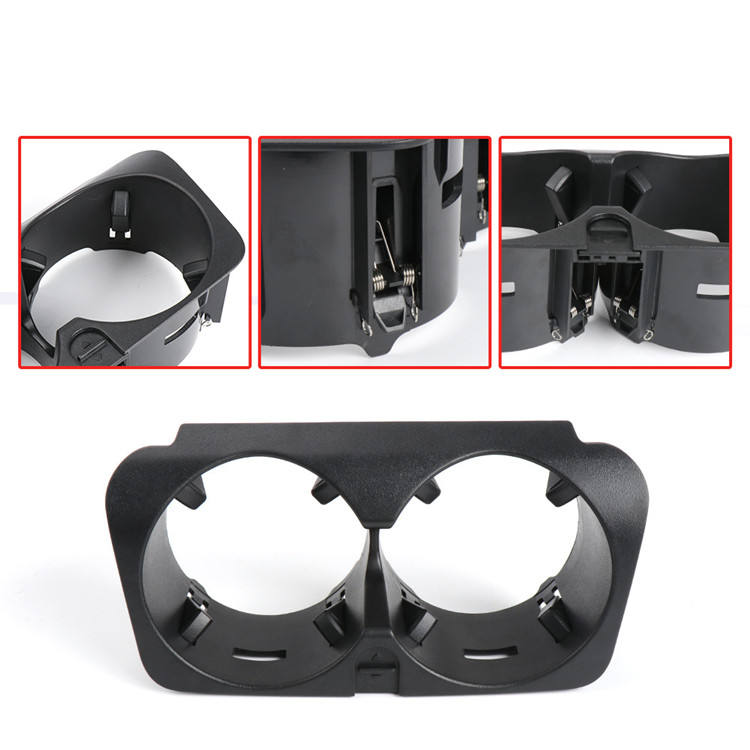
| Performance Index | Ordinary Die Casting Parts | High-Precision Custom Aluminum Alloy Die Casting Parts | Applicable Working Conditions |
|---|---|---|---|
| Internal Porosity Rate | High, obvious hidden dangers | Extremely low, vacuum densification treatment | High-pressure sealed pipelines, hydraulic components |
| Surface Roughness | Rough, easy to wear | Smooth precision polishing, low friction loss | High-speed rotating transmission structures |
| Temperature Resistance Range | Poor, easy deformation above 120℃ | Stable within -40℃~220℃ | High-temperature workshop & cold outdoor environment |
| Dimensional Tolerance Accuracy | ±0.15mm~±0.3mm | ±0.02mm~±0.05mm | Precision automation instruments & intelligent equipment |
| Salt Spray Corrosion Resistance | Less than 24 hours | More than 480 hours | Marine humid environment, outdoor corrosive occasions |
| Batch Consistency | Large deviation between batches | High uniformity, stable mass production | Large-scale assembly line supporting parts |
Beyond superficial parameter comparison, the post-processing process determines the final practical value of die-casting products. Surface anodizing, painting, passivation, and electroplating treatments improve oxidation resistance and aesthetics at the same time. Unstandardized surface treatment causes paint peeling, rusting, and insulation failure quickly, affecting electrical matching and mechanical safety. Complete supporting finishing processes cover all industrial application scenarios from structural load parts to precision decorative accessories.
Supply stability and delivery cycle also affect enterprise production planning greatly. Small-scale workshops face frequent mold damage, insufficient production capacity, and delayed delivery, disrupting the whole production schedule. Mature die-casting factories own complete mold development, mass casting, precision machining, and quality inspection systems, supporting small-batch trial production and large-scale bulk customized orders steadily. Stable supply chain cooperation reduces inventory pressure and production waiting time for downstream manufacturing enterprises.
In actual industrial application scenarios, aluminum alloy die-casting parts undertake core supporting roles in automobile chassis accessories, intelligent robot structures, communication equipment shells, power supply housings, and mechanical transmission brackets. Comprehensive consideration of material performance, processing precision, anti-fatigue ability, environmental adaptability, and after-sales guarantee can select truly cost-effective long-life mechanical components, fundamentally solving frequent failures, frequent replacements, and high maintenance costs encountered in daily equipment operation.